The Mistake Most Builders Make
When people think about EV conversions, they usually ask one question first: how big is the battery? More kWh means more range, so bigger is better—right? Not exactly. We’ve seen builds with massive battery packs that drive terribly. The issue isn’t capacity. It’s placement. Where you put the weight matters far more than how much of it you add.
Weight Distribution Changes Everything
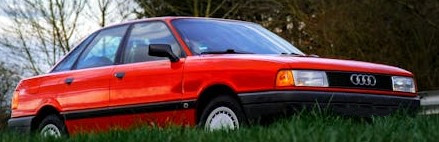
A gas-powered car is engineered around the weight of its engine, fuel tank, and drivetrain. Remove those and drop in a few hundred pounds of batteries in the wrong spot, and you’ve just ruined the car’s balance. It’ll understeer, oversteer, or just feel wrong in ways that are hard to describe but impossible to ignore. We approach every build by mapping weight distribution first. The goal isn’t to cram in the most cells—it’s to match or improve the car’s balance. That usually means splitting the pack, mounting cells low in the chassis, and sometimes sacrificing a few kWh to keep the center of gravity where it belongs.
Engineering for the Drive, Not Just the Spec Sheet
A well-placed 40 kWh pack will outperform a poorly placed 60 kWh pack in every way that matters: handling, braking, feel, safety. Range is important, but it’s not the only number that counts. When we design a conversion, the question isn’t “how much can we fit?” It’s “where does it need to go to make this car drive the way it should?” That’s the difference between a conversion that runs and one that performs.